 Skip-the-line available
 Chaumont-sur-Loire vs Château de Chenonceau
Two very different Loire experiences — contemporary gardens and art versus a purely historic riverside château. Here's how they compare.
Chaumont and Chenonceau are linked by more than geography — the two châteaux share a real historical connection through Catherine de' Medici and Diane de Poitiers, who famously traded them in 1559. But the visitor experiences today are genuinely different: Chenonceau is a purely historic château prized for its architecture and formal period gardens, while Chaumont layers a living, ever-changing contemporary garden and art programme onto a smaller historic core. Neither is objectively 'better' — they reward different interests, and this guide explains the real differences so you can decide how to split your time.
The Historical Connection
Chaumont and Chenonceau are tied together by one of the Loire Valley's best-known stories. Catherine de' Medici bought Chaumont in 1550. When her husband, King Henry II, died in 1559, Catherine — now the most powerful woman in France — moved against Henry's longtime mistress, Diane de Poitiers, who had been given the far grander Chenonceau by the king. Catherine forced Diane to trade Chenonceau for Chaumont, a plainly unequal swap that Diane had little choice but to accept. Diane spent little time at her new property; Chenonceau, meanwhile, became one of Catherine's own favourite residences.
That history explains why the two châteaux are so often mentioned together, but it also underscores how differently they developed afterward. Chenonceau's fame rests substantially on architecture and setting inherited from that Renaissance era — most famously its gallery spanning the River Cher. Chaumont's modern identity was shaped much later, by 19th-century owners who built its celebrated stables and reshaped its park, and then decisively by the 1992 launch of the International Garden Festival, which turned Chaumont into something Chenonceau never became: a venue for changing, contemporary design.
Gardens: Historic and Fixed vs Contemporary and Changing
This is the clearest difference between the two estates. Chenonceau's gardens are historic and formal — the geometric, terraced garden laid out for Diane de Poitiers and the more intimate garden created for Catherine de' Medici, both essentially fixed in character and maintained to their period design. They're beautiful in a classical, symmetrical way, and they don't change meaningfully from one visit to the next; a photograph taken this year and one taken a decade ago would look much the same.
Chaumont's gardens are the opposite proposition. Since 1992, the International Garden Festival has rebuilt a fresh set of contemporary gardens every single year around a new theme, submitted and judged competitively by designers from around the world. There's no fixed 'Chaumont garden' the way there's a fixed Chenonceau garden — the point is that it's different every season. Visitors who want a beautiful, settled historic garden should lean toward Chenonceau; visitors who want to see contemporary landscape design pushing in new directions each year should lean toward Chaumont.
Architecture and Setting
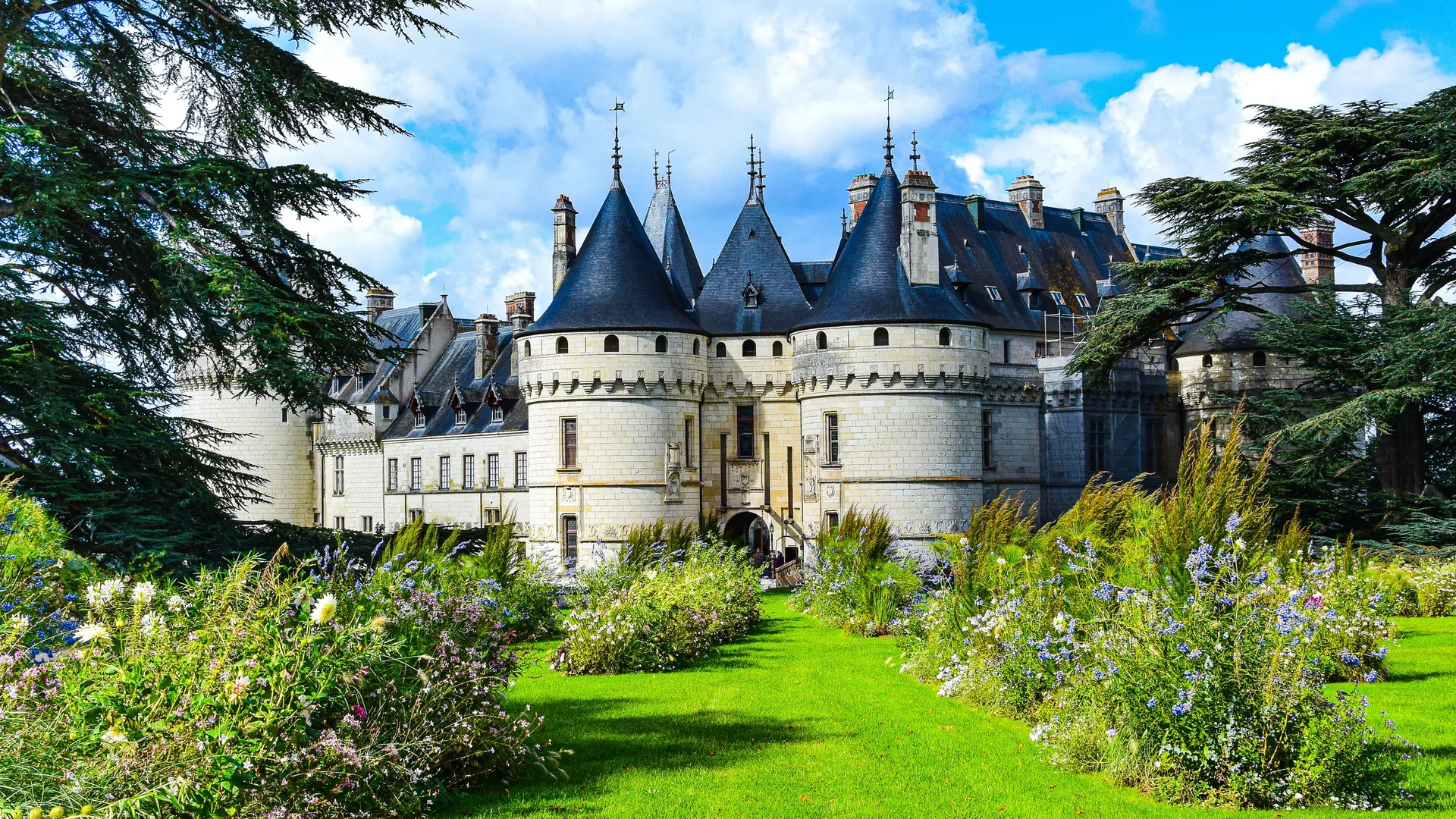
Chenonceau's architecture is the more immediately spectacular of the two — the château's famous gallery, built directly across the River Cher, is one of the most photographed structures in the Loire Valley, and the building's overall symmetry and riverside setting have made it one of the most visited châteaux in France. Chaumont's architecture is quieter and more overtly defensive in character: round towers, machicolations and a genuine drawbridge survive from its 1465–1510 rebuilding, giving it a more fortress-like presence than Chenonceau's palatial elegance.
Where Chaumont pulls ahead is scale and variety of estate: 32 hectares taking in the château, an English-style landscape park, the celebrated 1877 stables and the Saison d'Art contemporary-art programme, versus Chenonceau's more compact, garden-and-château-focused site. If you value architectural drama and a single unforgettable image, Chenonceau delivers it efficiently. If you value a full day's worth of varied grounds to explore, Chaumont offers more breadth.
Which Should You Choose?
If you have time for only one château and want the single most photogenic, historically resonant Loire experience, Chenonceau is the stronger pick — its architecture and formal gardens are essentially unmatched in the valley. If contemporary garden design, art installations and a broader, more varied estate appeal to you — or if you're visiting during the Garden Festival season and want to see something genuinely different from a conventional château visit — Chaumont is the better fit.
Many visitors don't have to choose at all: the two châteaux sit close enough together that pairing them in a single multi-day Loire itinerary is entirely realistic, and given their shared history, seeing both adds a layer of context neither delivers alone. If your schedule allows it, visiting Chenonceau for the architecture and formal gardens, then Chaumont for the contemporary gardens, art and stables, gives a genuinely complete picture of what the Loire Valley's châteaux can offer beyond the standard postcard view.
Frequently asked
Why are Chaumont and Chenonceau linked historically?
Catherine de' Medici bought Chaumont in 1550. After Henry II's death in 1559, she forced his mistress Diane de Poitiers to trade the grander Chenonceau for Chaumont — one of the Loire Valley's best-known château stories.
What's the main difference between the two châteaux today?
Chenonceau is prized for historic architecture and fixed formal gardens; Chaumont layers a contemporary, ever-changing Garden Festival and art programme onto a smaller historic core.
Which has better gardens?
It depends on what you want. Chenonceau's formal historic gardens are fixed and classically beautiful; Chaumont's International Garden Festival rebuilds contemporary gardens on a new theme every year since 1992.
Can I visit both in one trip?
Yes — the two châteaux sit close enough together to combine easily in a multi-day Loire Valley itinerary, and their shared history makes visiting both especially rewarding.
Which château is more architecturally impressive?
Chenonceau, generally — its gallery spanning the River Cher is one of the most photographed structures in the Loire Valley. Chaumont's architecture is more fortress-like and understated, but its estate offers more overall breadth with the stables and art programme.