 Skip-the-line available
 What to See at Château de Chaumont-sur-Loire
The historic château rooms, the 32-hectare park, the celebrated 1877 stables and the contemporary art program — decoded in plain English.
One ticket to Chaumont-sur-Loire unlocks four genuinely different experiences: a furnished Renaissance château with real royal history, a 32-hectare landscaped park, a set of 19th-century stables built to be the finest in Europe, and a rotating contemporary-art programme staged across all three. First-time visitors sometimes arrive expecting only the Garden Festival and miss how much else is on the estate. This guide walks through what's actually inside each part, so you know what you're looking at and how to prioritise your time.
The Historic Château Rooms
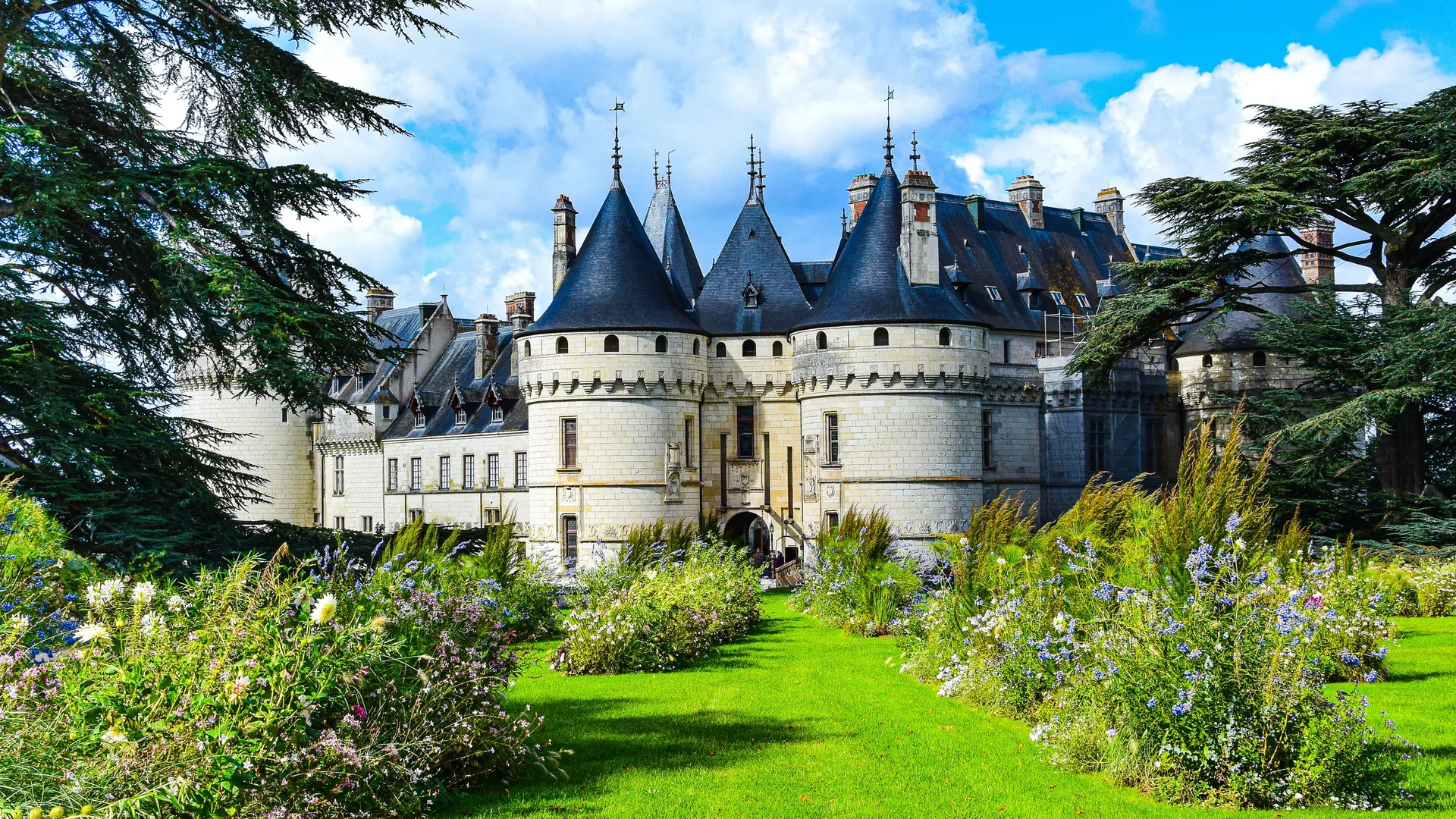
Chaumont began as a 10th-century fortress and still carries that history in its bones — round corner towers, machicolations and a genuine drawbridge survive from the rebuilding undertaken by the Amboise family between 1465 and 1510, after the original castle was demolished on the order of King Louis XI. Inside, the furnished apartments reflect a longer story than a single royal moment: refurnished across the 19th and early 20th centuries by later owners, they combine Renaissance-era structure with tapestries, painted ceilings and period furniture added well after the château's founding.
The single most atmospheric room is the Tower of Catherine de' Medici, fitted out as a small museum of medieval and Renaissance objects during a 19th-century restoration — the closest visitors get to a direct physical link with the château's most famous owner, who bought Chaumont in 1550 and later used it as leverage to force Diane de Poitiers into trading away her beloved Chenonceau. Chaumont's interiors are more intimate than Chambord's vast state rooms or Chenonceau's famous gallery, and that's deliberate — the château here is one part of a wider estate experience, not the whole show.
The Estate and Historic Park
The 32-hectare park surrounding the château was replanted in the English naturalistic landscape style during the estate's 1877 renovations, directed by architect Paul-Ernest Sanson alongside his work on the stables. Mature cedars, open lawns and river views define the grounds, which slope down towards the Loire and give Chaumont a genuinely spacious, unhurried feel compared to more tightly enclosed château gardens elsewhere in the valley. During the Garden Festival season, the park also hosts the temporary contemporary gardens, woven into the wooded parkland setting rather than laid out as a separate showground.
Outside festival season, the permanent park is still worth the walk on its own terms — it's a genuine piece of 19th-century landscape design, not simply a waiting room for the château or the seasonal gardens. Comfortable shoes are worth packing regardless of season, since much of the ground is gravel path and open lawn rather than paved courtyard.
The 1877 Stables
The stables are one of Chaumont's most underrated attractions, and a genuine surprise for visitors who come expecting only château rooms and gardens. Built in 1877 for Prince Amédée de Broglie by architect Paul-Ernest Sanson, they were explicitly designed to be the most luxurious and modern stable complex in Europe — two connected courtyards in brick and stone, one for the family's own horses and one for guests, built to house around forty horses.
What makes them worth the detour is how intact they've remained: original stalls, cartouches inscribed with individual horses' names, cast-iron mangers and drinking troughs finished with multicoloured enamelled plaques, and period brass fittings and lighting, largely unchanged since 1877. It's a rare, hands-on document of Belle Époque wealth that has nothing to do with medieval kings — just one couple's determination to build the finest stables their considerable fortune could buy.
The Contemporary Art Program
The Saison d'Art runs alongside the Garden Festival each season, staging contemporary sculpture and installation work through the château's rooms, the park and the historic stables. It extends Chaumont's identity beyond a conventional heritage site into a living arts venue — works change annually, are sited specifically for their surroundings, and are designed to be encountered while moving through the estate rather than viewed in a dedicated gallery space.
Because the art programme is woven through spaces you'd visit anyway — the château apartments, the parkland paths, the stable courtyards — it doesn't require a separate detour or extra time budget the way a standalone exhibition would. It's included in the same all-inclusive ticket as everything else on the estate, and the specific artists and works are best checked on the operator's own site closer to your visit date, since the programme changes every year.
Frequently asked
Is the château itself worth seeing, or is it mostly gardens?
Both. The château keeps real medieval-to-Renaissance architecture — towers, moat, drawbridge — and furnished interiors including the Tower of Catherine de' Medici. It's more intimate than Chambord or Chenonceau, but it's a genuine historic building on its own merits.
Are the stables really worth visiting?
Yes — built in 1877 to be the most luxurious stables in Europe, they're remarkably intact, with original cast-iron fittings and named horse stalls. Many visitors who come only for the gardens rate the stables as an unexpected highlight.
What is the Saison d'Art?
Chaumont's contemporary-art programme, staging sculpture and installation work through the château, park and stables each season alongside the Garden Festival. It's included in the standard ticket, with no separate admission.
How big is the park?
32 hectares, replanted in the English naturalistic landscape style during the 1877 renovations — mature cedars, open lawns and views down to the Loire, plus the seasonal festival gardens woven through it.
Do I need a separate ticket for the stables or the art season?
No. One all-inclusive ticket covers the château, park, Garden Festival, Saison d'Art and stables — there's no way to buy access to just one part of the estate.